
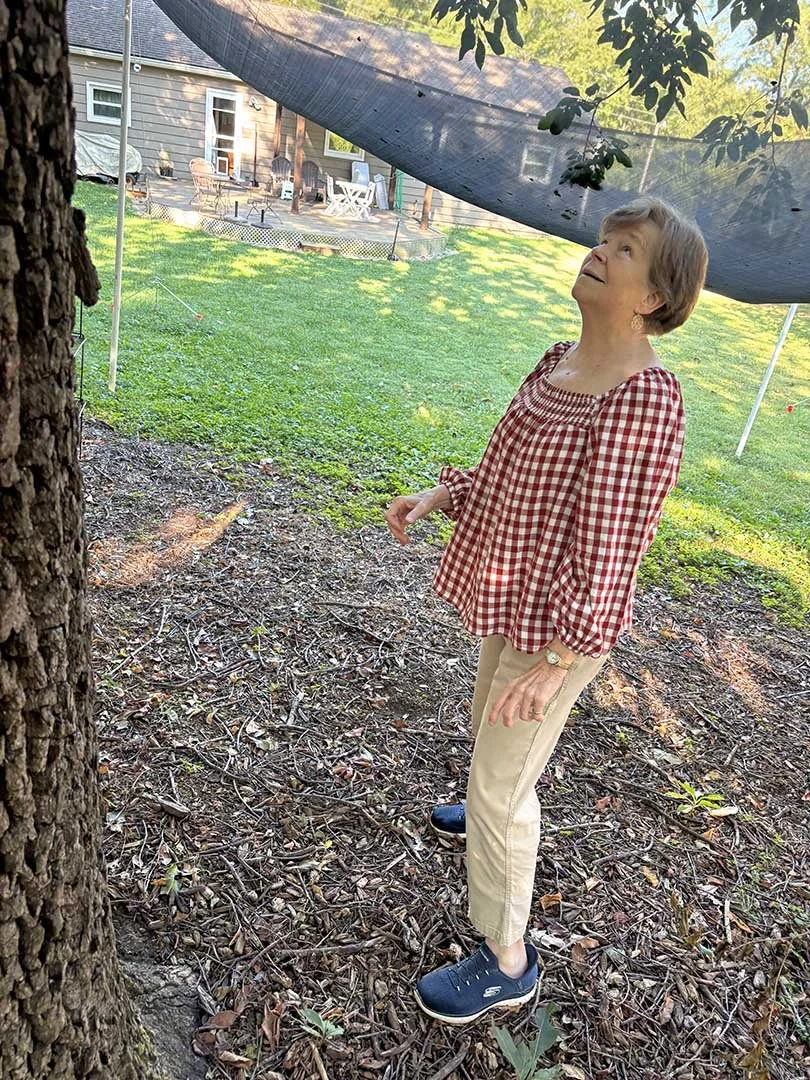
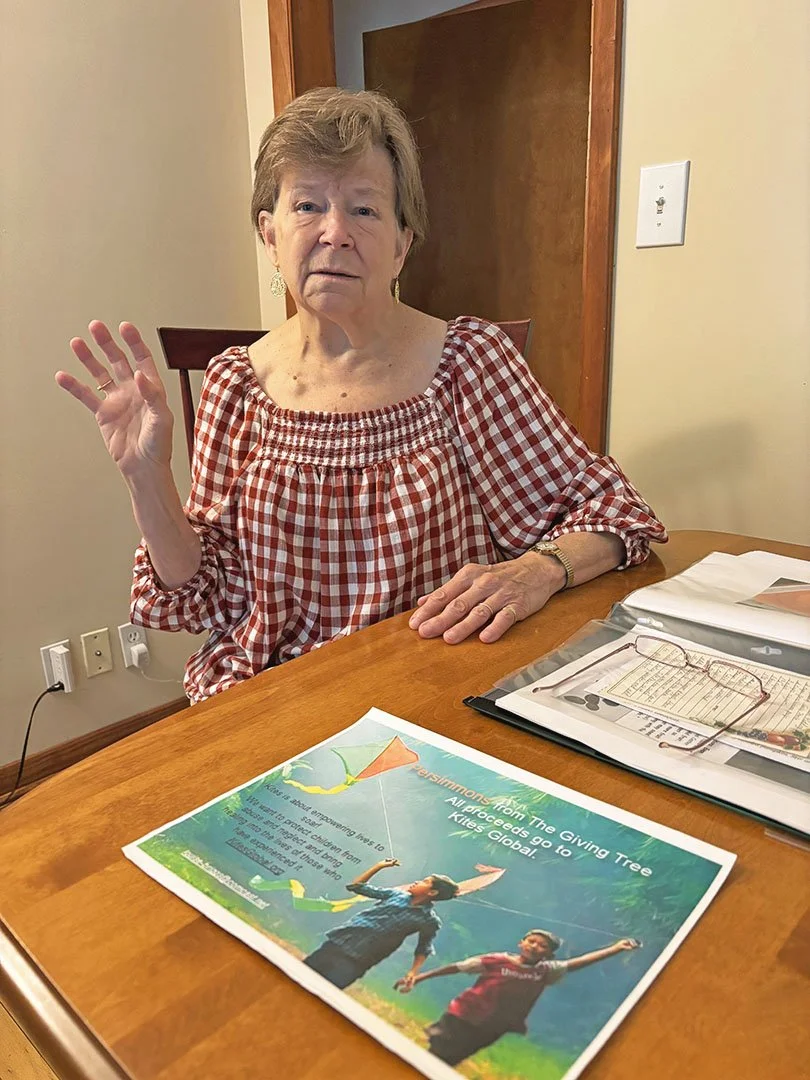
The Giving Tree, arguably the most famous persimmon tree in Bloomington, Indiana, towers over the back yard of the home that belonged to late Louise and Bob Briggs, longtime friends of New Hope for Families. Through a series of events described below, the seeds of this tree have become part of the Briggs’ legacy of support for local children and families experiencing homelessness.
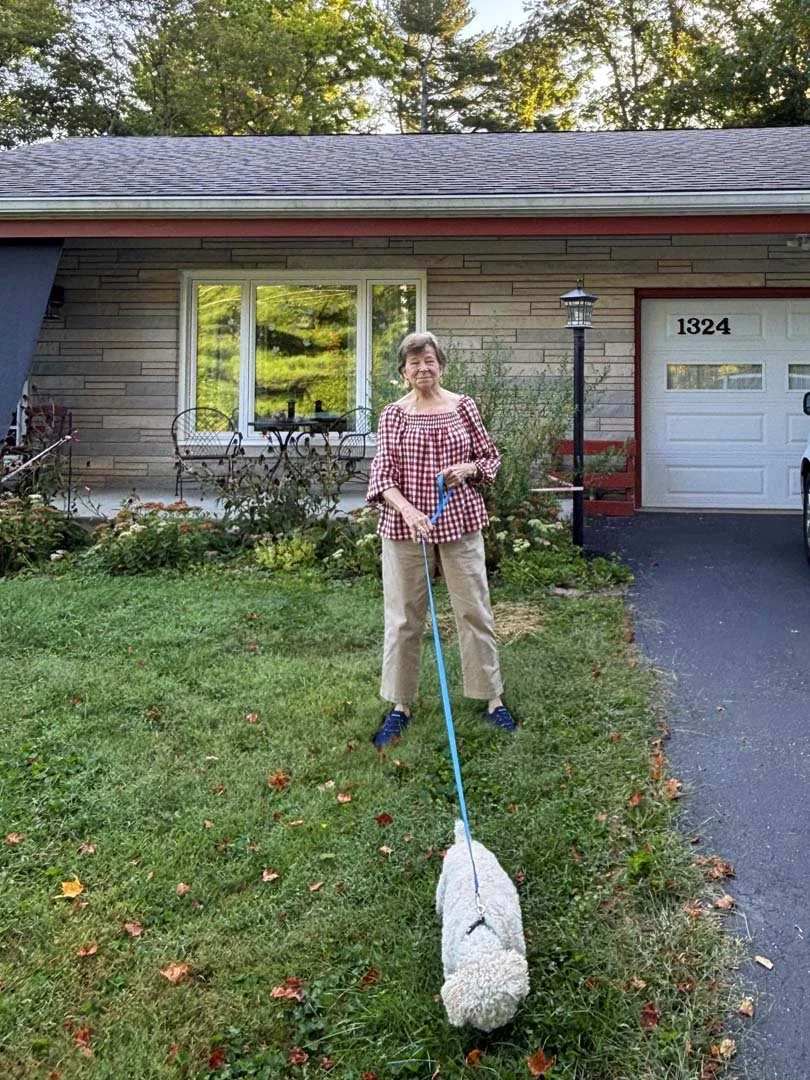
The tree did not always belong to the Briggs, and was not even always located within the city of Bloomington.
Sometime during the 1940s, a seed of an American persimmon tree (Diospyros virginiana) established itself in soil just north of the city on a residential plot owned by Lemuel and Audrey Whaley. The location proved to be fortuitous. Lemuel, an employee of Indiana University’s Department of Buildings and Grounds (in charge of caring for a campus now widely recognized for its wooded areas and natural beauty), was also an avid gardener. An auction notice published by Audrey in 1979, immediately following Lemuel’s death, included an extensive collection of gardening tools. Evidently, Lemuel and Audrey took very good care of the young tree and it thrived.
As the tree grew, so did the boundaries of the city. By the time Louise and Bob purchased the home in March of 2011, the tree was well within city limits, and had become the most prominent feature of the home’s back yard.
Moving from Boston, the Briggs had to rely heavily on the advice and assistance of their real estate agent. As they prepared to complete their purchase, Louise recalls the agent’s casual, understated remark, “and by the way, it seems that you have a persimmon tree in the back yard.”
Louise laughed as she recalled that moment. “What did I know about persimmon trees? I just moved from Boston and don’t recall ever seeing one!”
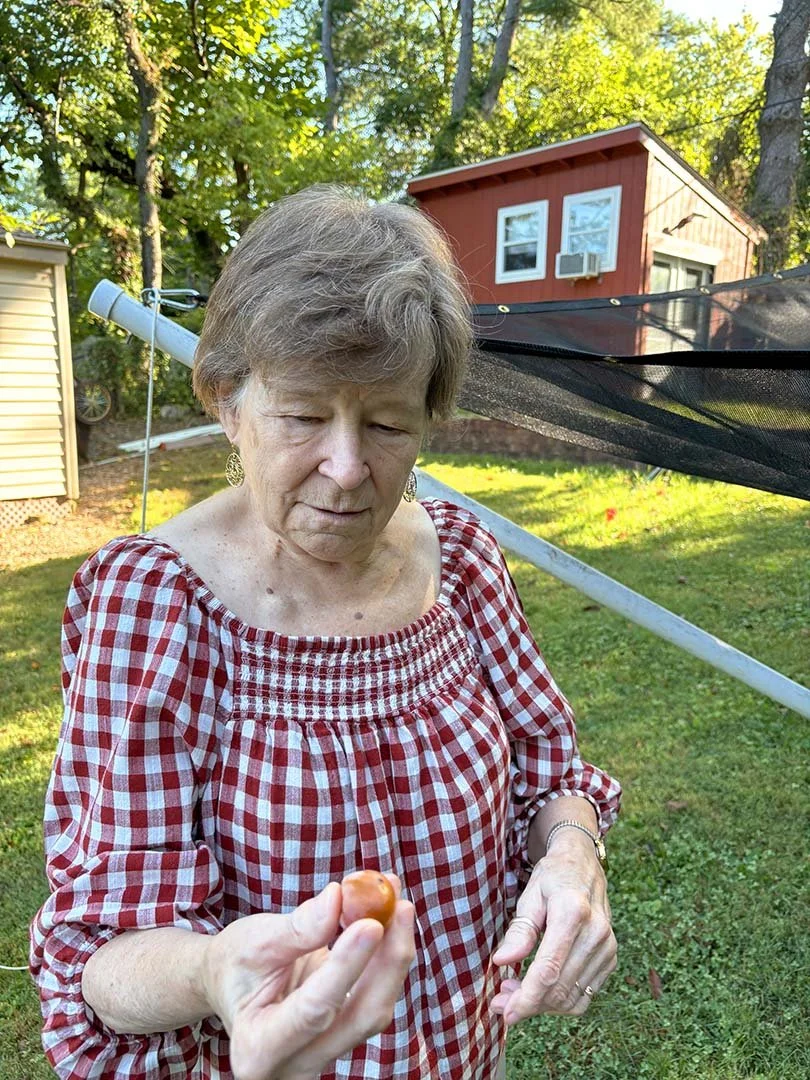
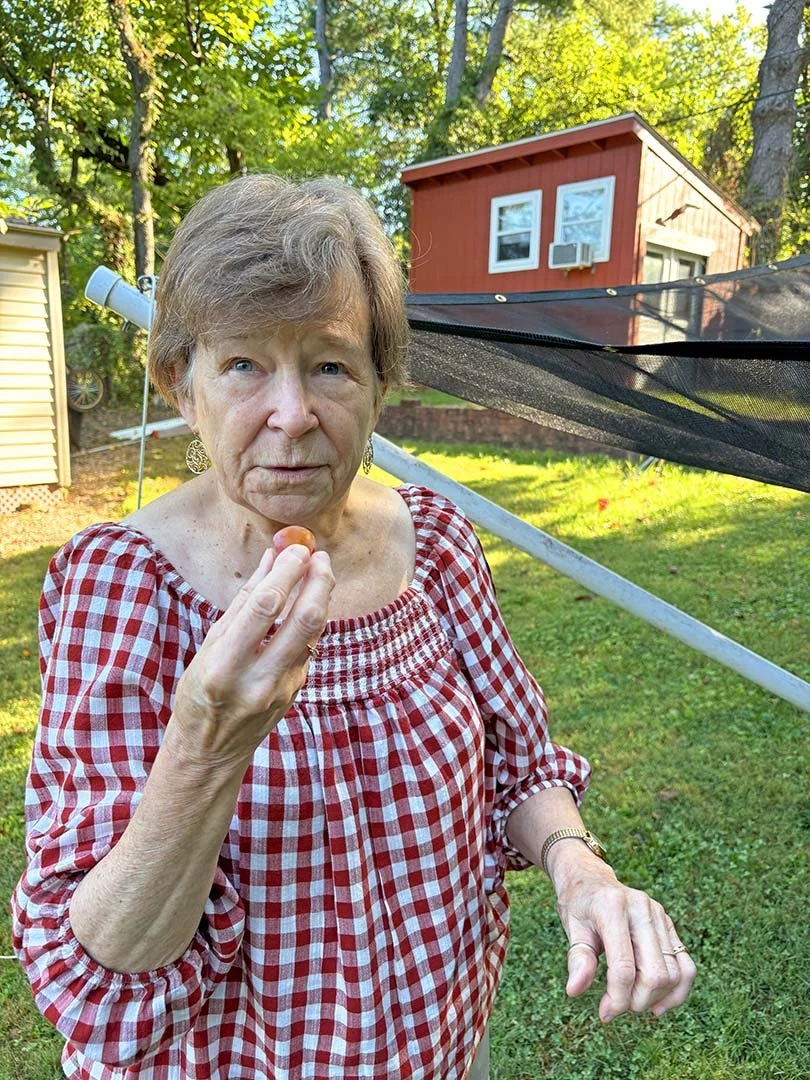
With a little research, Louise soon learned that the American persimmon tree typically produces over 100 pounds of fruit each year. The delicate fruits drop to the ground as they ripen, creating a thick layer of sweet, sticky pulp around the base of the tree. What she did not yet know, however, was that this particular specimen produced nearly ten times that amount of fruit in a typical season. That is a half-ton of delicate fruits, falling from heights of up to 65 feet, creating a challenging situation for the homeowner.
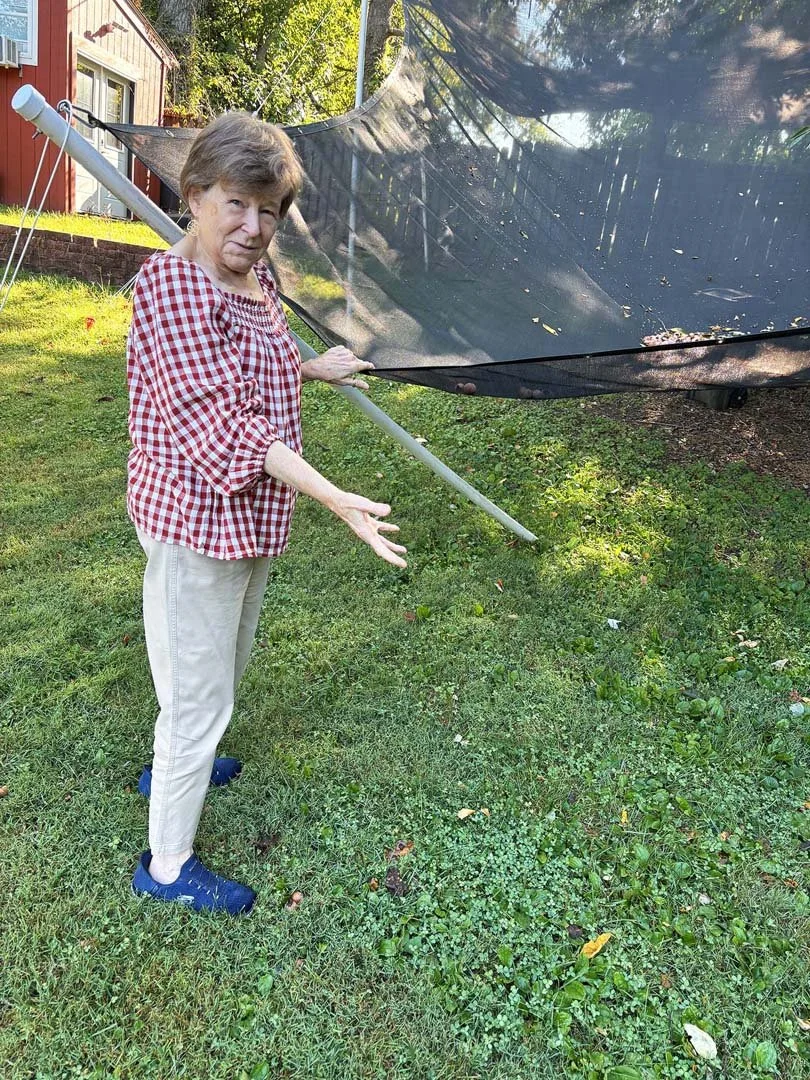
The Briggs designed a system of four large (20’ x 20’) nets, each suspended several feet above ground, to be installed under the tree during harvest season. These nets would protect the fruits as they fell and (just as importantly) prevent their dog from getting sick from eating too much of the fruit.
“As the fruit began to ripen and fall, we quickly realized that we could not manage this alone,” recalled Louise. “We invited friends and neighbors for what we called ‘perpetual persimmon pulping parties.’” About 10 people at a time in her small kitchen processed the fruit, extracting and selling the pulp, and donating proceeds to charity. An interview with Annie Corrigan, broadcast on “Earth Eats” (a locally produced weekly radio program), led to the establishment of a Facebook group called “The Persimmon Cartel” to help recruit and organize volunteers to harvest the fruit.
The Persimmon Cartel provided much-needed relief for the Briggs. It also enabled Louise to pursue her volunteer interests, including the recently established nonprofit New Hope for Families.
Founded in 2011, the year the Briggs moved to Bloomington, New Hope provided emergency shelter, full-day child care, and other essential services for families with children impacted by homelessness. The cash-strapped agency relied heavily on volunteer support in order to fulfill its mission. Louise and her friend Pam Dyer noticed that New Hope staff spent a significant portion of their time sorting through in-kind donations (sheets, towels, blankets, kitchenware, etc.) from generous community members. Soon, Louise and Pam were devoting one day every week to the project, which in turn freed up New Hope staff to focus more on providing services.
Cory Lamping, a member of the Persimmon Cartel and currently the Programs and Garden Manager for the Hoosier Hills Food Bank, took special interest in the seeds from the Briggs tree, due to its unusually high yield and especially desirable fruit. Cory thought that other growers might benefit from access to the seeds, and asked Louise for permission to sell the seeds through the Experimental Farm Network (EFN). Founded in 2013, the EFN is nonprofit composed of professional and amateur farmers, gardeners, plant breeders, and researchers. Louise quickly agreed, suggesting that any funds raised from the sale could support the work of New Hope for Families.
Persimmon seed sales continue to support New Hope on an annual basis. Seeds from the 2025 harvest are available for purchase at https://store.experimentalfarmnetwork.org/products/giving-tree-persimmon
Louise Briggs passed away on December 2, 2025, after an extended illness.
Whether or not you have a persimmon tree in your back yard, you too can establish a legacy of support for children and families impacted by homelessness. Visit our Gift Planning page to learn tax-wise giving strategies that can benefit your family while also supporting your favorite charities. Request your free Estate Planning Guide today or contact our Development Director Jim Olsen by phone at (812) 334-9840 ext 105 or by email at development@newhopeforfamilies.org.
